Koi Foods; Dainichi vs Inochi
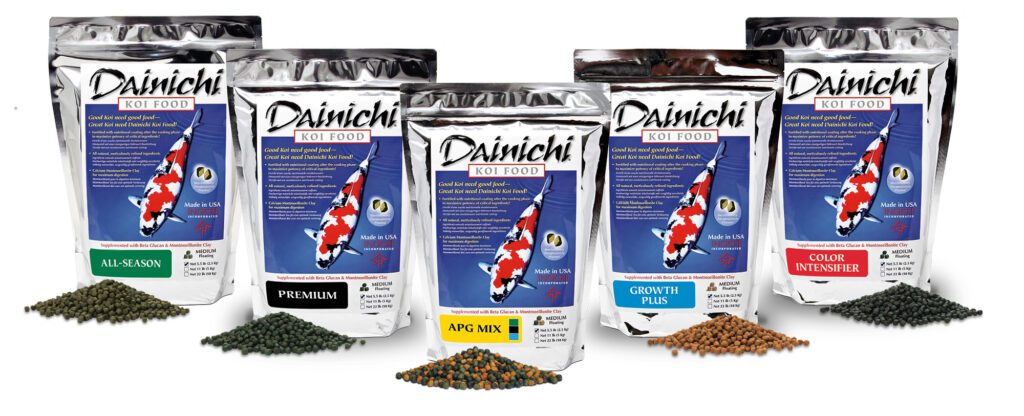
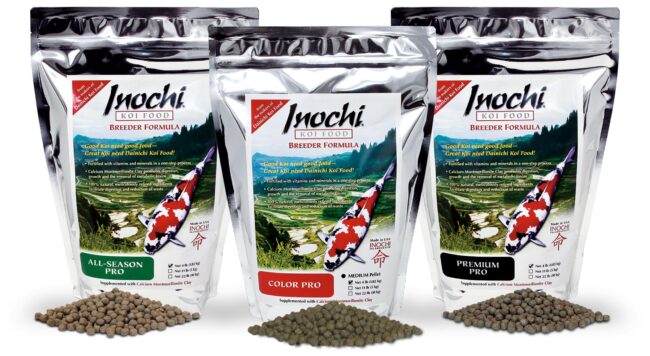
Each of these two koi food product lines offers pros and cons to the keepers of these elegant fish. To simplify the decision making process, we will point out the similarities as well as the key differences between these foods
The most obvious difference is that the Inochi Koi Food foods do not have the external application of the nutritional coating. The secondary application of vitamins, prebiotics and supplements such as garlic and spirulina algae is found exclusively in the foods in the Dainichi Koi Food product line. This encapsulation process is wonderful in its performance and benefits and is not offered by any other manufacturer of koi food in the world! Why? The answer is simple – cost. This process is tedious and easily doubles the time it takes to manufacture the food. Who in their right mind would commit to investing 100% more time and expense to producing unique and special koi food when everyone else from real manufacturers to re-packers of feed mill food are fine selling the cheapest mass-produced food available? Only a manufacturer interested in prducing the ultimate diets and not concerned as much with the difficulty and cost it takes to achieve these unrivaled creations.
The only downside to the hobbyist is the added cost (about 25-30%, not 100% – we eat the majority of the expense so that you, the hobbyist, and your koi can reap the benefits of the spectacular feature.
As both of these product lines are made by us, the quality if ingredients and most of the manufacturing technology and processes are the same. Although the Inochi foods cost less, they are not cheapened with lesser ingredients. They are less costly simply because they do not undergo a whole intensive manufacturing process, which is the nutritional encapsulation. If a koi keeper or seriously dedicated koi connoseuir seeks the best possible food for their fish, the Dainichi koi formulas will fill the bill. The selected ingredients are the best-of-the-best; not just premium but ultra premium. Premium is now a practically a useless term when describing ingredient quality as virtually every food on the market, no matter how bad it is, claims to be made with best or premium ingredients. This however, is not true. With food, you realy get what you pay for. Those inexpensive aquaculture-derived foods made specifically for raising fish for their meat, are full of low grade fillers and fats intended to be converted into delicious fish filets. These foods purpose isto fatten the fish and no consideration is given to the water quality as there either is a continuous change-over of the polluted water or the water volume present is so large that the impact of the pollutants is less impactful. This is the polar opposite of the needs of the hobbyists who have to contend with a finite water volume and ultimately the desire to have healthy, beautiful fish with a long lifespan.